

Look at almost any WWI or early WWII photo of a British soldier and you'll spot the long cloth strips wound around the lower leg from boot to knee. They look faintly medieval today — but they were doing a genuinely useful job, right up until better boots made them unnecessary.
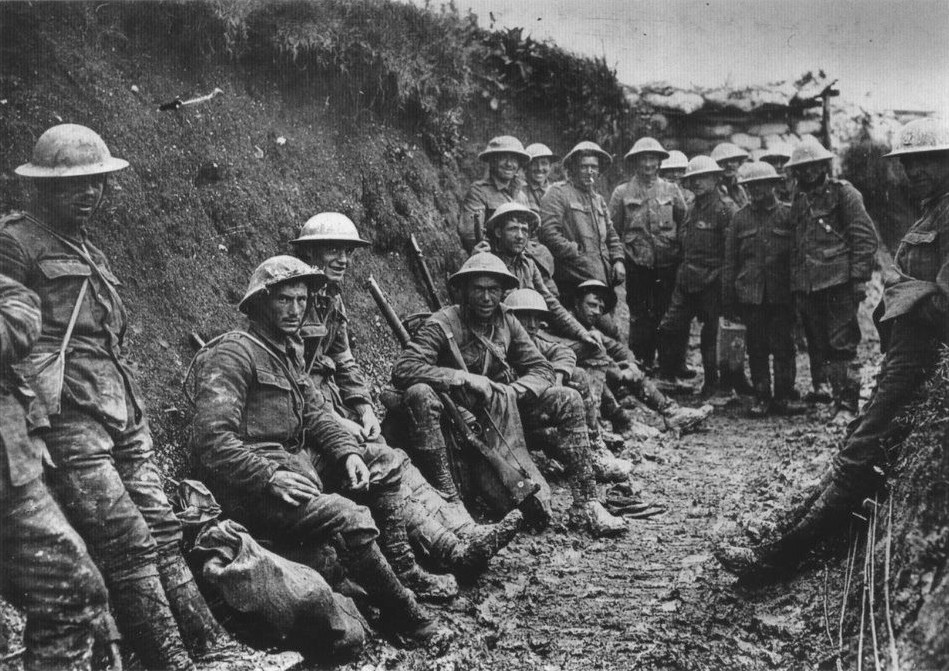
Puttees clearly visible on these soldiers, Somme, July 1916. Imperial War Museums, public domain (Crown Copyright expired).
What they actually did
Puttees kept mud, debris and water out of the top of the boot, while also saving on leather at a time when full-height leather boots were expensive to produce at scale. Wound tightly and spirally up the leg, they doubled as a compression support too — not purely decorative, genuinely functional field kit. See our WWI uniform history for the full context of when they were standard issue.
How they were actually put on
Wrapping puttees correctly took genuine practice — wound too loose and they'd unravel and trail on the ground within minutes of marching; wound too tight and they'd cut off circulation over a long day. New recruits were specifically drilled in wrapping them properly, and a soldier's puttees were one of the small, everyday details an NCO would check on inspection.
Not every regiment wore them the same way
Highland and other kilted regiments didn't wear puttees at all in the same sense — with a kilt, the lower leg was instead covered by hose (thick woollen socks) worn up to just below the knee, held in place with garter flashes, a coloured strip of cloth tucked into the top of the hose that's still a distinctive part of Scottish regimental dress today. It's a good example of how a single piece of "standard" kit often had genuine regional and regimental variations rather than being truly universal across the whole Army.
Why they disappeared
Puttees were standard through the WWI-era khaki Service Dress from 1902 onward, but by 1938 the new Battle Dress introduced short webbing gaiters secured with buckles instead — a much faster, simpler alternative. Puttees had generally disappeared from British military uniform by WWII. The honest reason: taller boots became easier and cheaper to manufacture with improving leather and synthetic materials, which solved the original mud-and-debris problem directly, and wrapping puttees neatly took genuine time and practice that a simple buckled gaiter didn't need.
Why this matters for collectors
Genuine puttees are a reliable era-marker — spotting them (or their absence, or hose and garter flashes instead) on a uniform photo or piece of kit is a quick way to place it roughly pre- or post-late-1930s, and to spot a kilted regiment's kit at a glance.
Looking for genuine period-correct WWI or early WWII leg wear? Email us at sales@jungleuk.com and we'll help.
What replaced them: gaiters and anklets
Puttees did not simply disappear — they were superseded. The job they did (sealing the gap between boot and trouser, and supporting the ankle) still needed doing, so the Army replaced them with something that did it faster.
The web anklet arrived with 1937 Pattern webbing: a short canvas cuff with two buckled straps. Everything puttees did, in about four seconds a leg instead of two minutes, and with no skill required to get right.

RN Royal Navy Ratings Anklets White Cotton Canvas Webbing Leggings / Ankle G
Ceremonial white gaiters
The white gaiter never went away, because on parade it was never about practicality. It is worn today with No1 dress by Guards regiments, Royal Navy guards and ceremonial parties — a hard, bright white line at the ankle that makes a rank of men look like a single object when they move together.
Modern ones are Courlene or nylon rather than canvas, for the simple reason that they need to come up brilliant white every time without hours of blanco.

Genuine British Ceremonial White Gaiter Courlene Nylon Material Wide
Shop ceremonial white gaiters →
Modern combat gaiters
Today's field gaiter is a different animal again: a tall waterproof cuff reaching most of the way up the calf, designed to keep water, mud, snow and scree out of the boot rather than to support the ankle.
It is the one piece of this lineage that has genuinely improved rather than just changed. A soldier in Norway or the Brecon Beacons wants exactly this.

MTP Heavy Duty Gaiters MK2 MKII Genuine British Army Camo Breathable Size 4-
Puttee, anklet, gaiter — the quick version
- Puttee — a long wool strip wound up the leg. Pre-1940 British service. Slow to put on, warm, and completely obsolete.
- Anklet — short buckled canvas cuff. The wartime replacement. Still worn by the Royal Navy.
- Gaiter — taller, and now two distinct things: white ceremonial for parade, and waterproof for the field.
A note if you are buying
We rarely have genuine issue puttees — they went out of service before most surviving surplus was made, and what does surface tends to go to museums and collectors rather than into general stock.
Gaiters and anklets we do stock, and they are still in use, so sizing is straightforward. If you are kitting out for a specific period or a specific parade, tell us which and we will tell you what is actually correct rather than what merely looks the part.

Vintage Swedish Navy Gaiters / Anklets Cotton Canvas / Leather Straps